
Front of house
Ticket route, entrance, seating/standing, accessible seating, bathrooms, water, sensory conditions, age rules and audience access contact.
Access can fail in the parking lot, at the loading door, during a surprise lighting cue, in an inaccessible green room, or when the only contact is a phone number nobody can use comfortably. Venue information should travel with the booking instead of arriving as a crisis at call time.
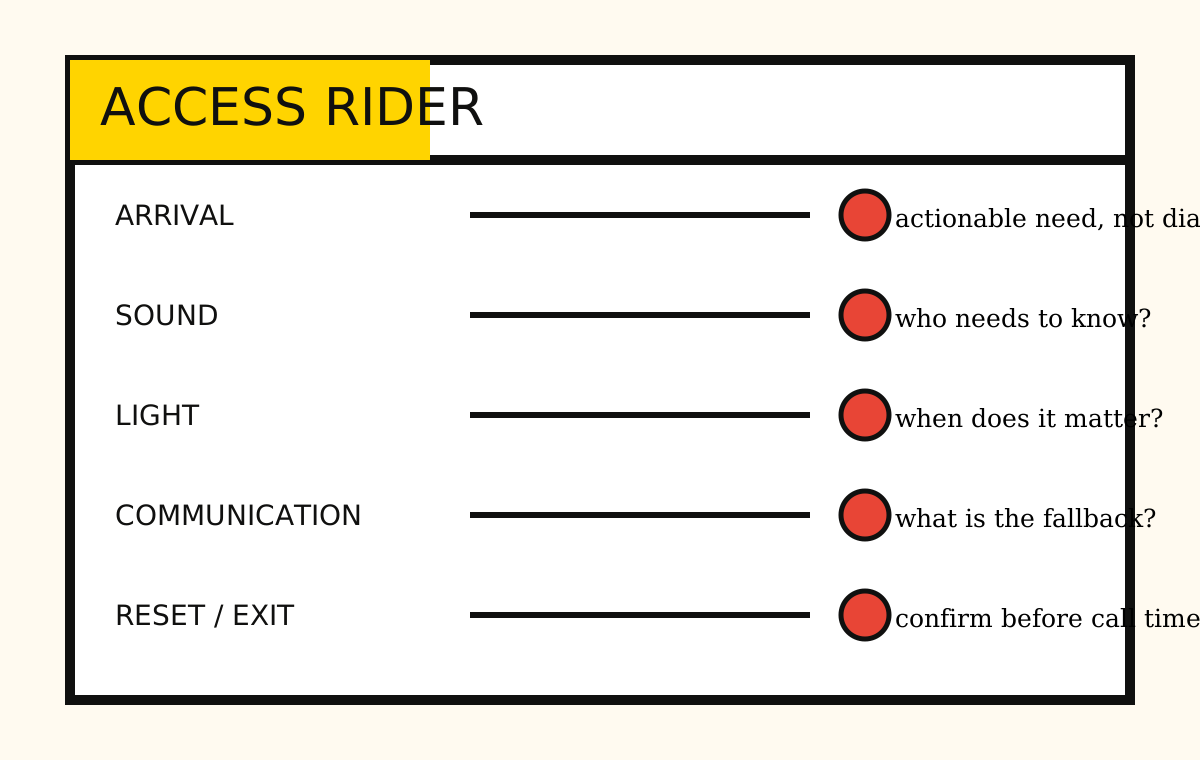
A production version should separate verified venue facts from performer-specific requests. Private venues open to the public can also have ADA Title III obligations; ANCHOR’s passport would be an operational tool, not a legal certification.
Ticket route, entrance, seating/standing, accessible seating, bathrooms, water, sensory conditions, age rules and audience access contact.
Load-in, stage route, green room, stairs/lift, backstage bathroom, storage, call-time contact and whether a support person can accompany the artist.
Stage dimensions, power, inputs, monitor/IEM capability, lighting control, haze/strobe use, house SPL policy, changeover and curfew.
Confirm date, set length, pay, age policy, ticketing, accessibility contact and basic production.
Exchange stage plot, input list, access rider, load-in route, lighting constraints and support-person needs.
Meet the named contact. Verify anything that changed since the advance.
Treat monitor, SPL and lighting decisions as access decisions as well as production decisions.
Keep exit/reset route available. Do not improvise away agreed access without asking.
Pay, merch, gear, incident notes, accessibility feedback and whether the venue record needs an update.